
The Trial by Franz Kafka: A Comprehensive Guide to the PDF & Novel
Finding a “The Trial” PDF can offer convenient access to Kafka’s work, though caution is advised regarding source legitimacy and potential risks associated with unofficial downloads.

Understanding the Novel’s Core Themes
At its heart, Kafka’s “The Trial” delves into profoundly unsettling themes of alienation, anxiety, guilt, and the opaque nature of power. The readily available “The Trial” PDF versions allow widespread exploration of these concepts. Joseph K.’s inexplicable arrest and subsequent struggle to understand his alleged crime embody the modern individual’s sense of helplessness against overwhelming, bureaucratic forces.

The novel doesn’t focus on what K. is accused of, but rather that he is accused, highlighting the absurdity of existence and the futility of seeking rational explanation in an irrational world. Accessing the text via a “The Trial” PDF facilitates focused study on these existential anxieties. Kafka masterfully portrays a world devoid of clear justice, where individuals are subject to arbitrary authority and the pursuit of truth becomes a labyrinthine and ultimately fruitless endeavor.
Ultimately, the core themes resonate with readers grappling with feelings of powerlessness and the search for meaning in a complex and often bewildering world, making the PDF a valuable resource for analysis.
Joseph K.’s Predicament: A Summary of the Plot
The narrative unfolds with the startling arrest of Joseph K., a bank clerk, on his thirtieth birthday – for an unspecified crime. A “The Trial” PDF allows readers to follow his bewildering journey as he attempts to navigate a secretive and inaccessible legal system. Despite maintaining his innocence, K. is never informed of the charges against him, initiating a frustrating and anxiety-ridden quest for answers.
Throughout the novel, K. attempts to understand the court’s proceedings, encountering a cast of enigmatic characters who offer little clarity. He visits various officials, attends hearings in cramped and unsettling locations, and becomes increasingly consumed by his case. The accessibility of a “The Trial” PDF enables close examination of these encounters.
Ultimately, K.’s efforts prove futile; he is executed by two mysterious men, his fate sealed without a definitive judgment, leaving the reader with a chilling sense of injustice and the absurdity of his predicament.
The Allegory of Bureaucracy and Powerlessness
“The Trial,” readily available as a “The Trial” PDF, serves as a potent allegory for the crushing weight of bureaucracy and the individual’s powerlessness against an opaque system. Kafka masterfully depicts a world where logic is absent, and individuals are reduced to mere numbers within a vast, uncaring machine.
Joseph K.’s struggle highlights the frustration of dealing with an authority that operates outside the bounds of reason or transparency. The court, never fully defined or explained, symbolizes the arbitrary nature of power and the difficulty of challenging established institutions. Accessing the text via a “The Trial” PDF allows for detailed analysis of these symbolic representations.
Kafka’s work resonates because it captures the anxieties of modern life, where individuals often feel overwhelmed by complex systems and lack control over their own destinies. The novel’s enduring relevance lies in its exploration of these universal themes.
Availability of “The Trial” PDF Versions
Numerous “The Trial” PDF versions are readily accessible online, ranging from officially digitized copies to those created through scanning. Websites offering free ebooks frequently host the novel, making it easily obtainable for readers worldwide. However, the quality of these PDFs can vary significantly, impacting readability and formatting.
Digital libraries and online bookstores also provide “The Trial” in PDF format, often as part of larger collections or individual purchases. These sources generally offer higher-quality scans and more reliable file integrity. Searching for “The Trial Kafka PDF” yields a vast number of results, demonstrating its widespread digital availability.
The proliferation of PDF versions underscores the novel’s enduring popularity and accessibility in the digital age, allowing readers to engage with Kafka’s work regardless of physical book access.
Legitimate Sources for Downloading the PDF
For a secure and legal “The Trial” PDF download, prioritize established online bookstores like Amazon Kindle Store, Google Play Books, and Apple Books. These platforms offer purchased PDF versions ensuring quality and copyright adherence. Project Gutenberg is another excellent resource, providing free, legally-sourced ebooks, including Kafka’s works, in various formats, including PDF.
University and public library websites often offer digitized versions of classic literature, accessible with a library card. Reputable academic databases may also contain scholarly editions of “The Trial” in PDF format. Always verify the source’s legitimacy before downloading to avoid malware or copyright infringement.
Choosing these trusted sources guarantees a safe and ethical reading experience, supporting authors and publishers while enjoying Kafka’s masterpiece.
Potential Risks of Unofficial PDF Downloads
Downloading “The Trial” PDF from unofficial sources presents significant risks. These websites often harbor malware, viruses, and spyware, compromising your device’s security and personal data. Illegally obtained PDFs frequently contain low-quality scans with formatting errors, hindering readability and the overall reading experience.
Furthermore, accessing copyrighted material through unauthorized channels is illegal and supports intellectual property theft. Such sites may also engage in phishing scams, attempting to steal your financial information or login credentials. The lack of quality control means the PDF could be incomplete or contain altered content.
Prioritizing legitimate sources, even if requiring a purchase, safeguards your digital wellbeing and respects the author’s rights, ensuring a secure and enjoyable reading experience.
Character Analysis: Joseph K.
Joseph K., the protagonist of “The Trial,” is a seemingly ordinary bank functionary thrust into an extraordinary and bewildering situation. He embodies a passive acceptance of his fate, despite his persistent, yet ultimately futile, attempts to understand the charges against him. His character is defined by a frustrating lack of agency, mirroring the powerlessness felt within Kafka’s bureaucratic nightmare.

Though he seeks legal counsel and investigates the court system, Joseph K. remains largely detached, observing the absurdity around him with a disconcerting calmness. He’s not inherently rebellious, but rather driven by a need for rational explanation in an irrational world. Accessing the novel via a “The Trial” PDF allows close examination of his internal struggles.
Ultimately, Joseph K.’s passivity contributes to his downfall, highlighting the dangers of conformity and the crushing weight of an incomprehensible authority.
Key Characters and Their Symbolic Roles
Beyond Joseph K., “The Trial” features a cast of enigmatic characters, each embodying aspects of the novel’s central themes. Frau Bürstner represents a fleeting possibility of connection and escape, yet remains ultimately unattainable. Huld, the painter, symbolizes the elusive nature of truth and the distortion of reality within the court’s influence. Accessing a “The Trial” PDF facilitates detailed character study.
The lawyer, Hasterer, embodies the ineffectiveness and corruption of the legal system, offering only vague promises and convoluted explanations. The court officials themselves are faceless representatives of an oppressive, unseen power. Their roles aren’t defined by individual motivations, but by their function within the bureaucratic machine.
These characters, viewed through the lens of a readily available PDF version, collectively contribute to the novel’s allegorical exploration of guilt, justice, and the human condition.
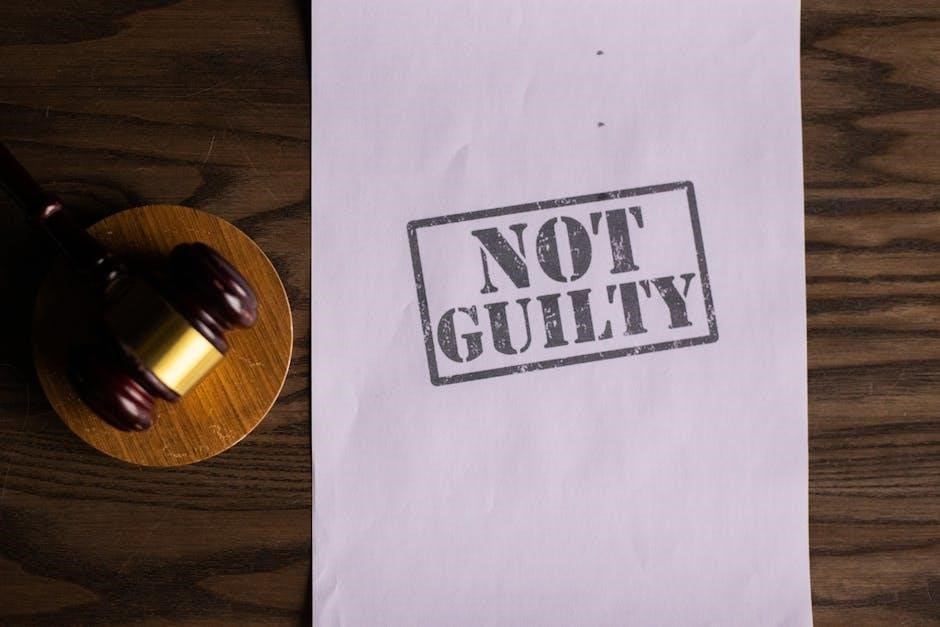
The Unseen Authorities: Exploring the Court System
Kafka’s court in “The Trial” is notoriously abstract and inaccessible, existing outside the bounds of conventional legal structures. It operates in attics, corridors, and private apartments, lacking any discernible hierarchy or transparency. Obtaining a “The Trial” PDF allows for close examination of descriptions detailing this unsettling system.
The authorities remain nameless and faceless, communicating through intermediaries and issuing cryptic directives. This deliberate obscurity amplifies Joseph K.’s sense of powerlessness and alienation. The court’s procedures are illogical and arbitrary, defying any rational explanation. It’s a system designed to confuse and demoralize, rather than to deliver justice.
Analyzing the court’s structure within a digital PDF copy reveals Kafka’s critique of bureaucratic power and the dehumanizing effects of unchecked authority;
Historical Context: Kafka’s Life and Times
Franz Kafka lived during a period of immense social and political upheaval in Europe, marked by the decline of the Austro-Hungarian Empire and the rise of modern bureaucracy. Accessing a “The Trial” PDF provides a textual foundation for understanding how these anxieties permeate his work. Born in Prague in 1883, Kafka experienced firsthand the tensions between different ethnic groups and the oppressive weight of imperial rule.
His own experiences as a lawyer in a bureaucratic insurance company deeply informed his portrayal of the legal system in “The Trial.” The novel reflects the anxieties of a modernizing world, where individuals felt increasingly alienated and powerless in the face of impersonal institutions.
Studying Kafka’s biography alongside a digital PDF version of the novel illuminates the historical forces that shaped his artistic vision and the enduring relevance of his themes.
The Novel’s Publication History and Reception
“The Trial” was not published during Franz Kafka’s lifetime; he instructed his friend Max Brod to destroy all his unpublished manuscripts. Fortunately, Brod disregarded this request, recognizing the literary merit of Kafka’s work. A PDF version today allows widespread access to this previously hidden masterpiece. The novel was first published in 1925, several years after Kafka’s death, and quickly gained recognition as a seminal work of 20th-century literature.
Initial reception was mixed, with some critics puzzled by its ambiguous narrative and unsettling atmosphere. However, it soon became celebrated for its profound exploration of themes like guilt, alienation, and the absurdity of modern life.
The availability of a “The Trial” PDF has further cemented its place in the literary canon, enabling generations of readers to engage with Kafka’s haunting vision.

Literary Influences on Kafka’s Work
Franz Kafka’s unique style wasn’t born in a vacuum; numerous literary currents shaped “The Trial.” He was deeply influenced by writers like Fyodor Dostoevsky, whose exploration of psychological torment and moral ambiguity resonates strongly within Kafka’s work. The pessimistic philosophies of Arthur Schopenhauer and Friedrich Nietzsche also contributed to Kafka’s bleak worldview, evident even in a readily available PDF version of the novel.
Furthermore, the burgeoning field of psychoanalysis, pioneered by Sigmund Freud, likely impacted Kafka’s focus on the subconscious and the irrational.
These influences, combined with Kafka’s own experiences of alienation and bureaucratic frustration, coalesced into a distinctly modern literary voice, now accessible to a global audience through digital formats like the “The Trial” PDF.
Symbolism in “The Trial”: Doors, Rooms, and Spaces
Throughout “The Trial,” Kafka masterfully employs symbolism, particularly through the recurring motifs of doors, rooms, and enclosed spaces. Doors often represent opportunities or barriers, yet Joseph K.’s attempts to pass through them are consistently frustrating and ambiguous, even when reading a digital PDF copy. Rooms, frequently small and cramped, symbolize K.’s increasing psychological confinement and the oppressive nature of the legal system.
The labyrinthine architecture and undefined spaces reflect K.’s disorientation and the elusive nature of his crime. Access to certain areas is inexplicably denied, highlighting his powerlessness.
Analyzing these spatial elements, even within a convenient “The Trial” PDF, reveals Kafka’s exploration of alienation, guilt, and the individual’s struggle against an incomprehensible authority.
The Significance of Dreams and Nightmares
Dreams and nightmares permeate “The Trial,” functioning as crucial windows into Joseph K.’s subconscious anxieties and the irrationality of his predicament; Even when studying the novel via a readily available PDF version, the unsettling dream sequences remain powerfully evocative. These nocturnal visions often feature distorted imagery and symbolic representations of K.’s guilt, fear, and helplessness.

Kafka utilizes these dreamscapes to bypass logical reasoning, directly conveying the emotional and psychological toll of K.’s arrest. The blurring of reality and illusion within the dreams mirrors the novel’s overall atmosphere of ambiguity.
Examining these sequences, whether through a physical book or a digital “The Trial” PDF, reveals Kafka’s exploration of the unconscious mind and its role in shaping our perception of justice and culpability.
Recurring Motifs and Their Interpretations
Throughout “The Trial,” certain motifs persistently reappear, enriching the narrative’s symbolic depth, even when experienced through a convenient PDF download. Doors, for instance, frequently symbolize access – or lack thereof – to understanding and justice, often appearing locked or leading to obscure locations.
Similarly, rooms and spaces represent psychological states and the labyrinthine nature of the legal system. The novel’s pervasive sense of claustrophobia is amplified by these confined settings. Analyzing these motifs, regardless of whether reading a physical copy or a “The Trial” PDF, reveals Kafka’s masterful use of symbolism.
These recurring elements contribute to the novel’s unsettling atmosphere and invite multiple interpretations regarding power, guilt, and the human condition.
Critical Interpretations of “The Trial”
Numerous critical lenses have been applied to “The Trial,” offering diverse interpretations, accessible even when studying the text via a readily available PDF version. Existentialist readings emphasize Joseph K.’s alienation and the absurdity of his situation, highlighting the search for meaning in a meaningless world.
Alternatively, Marxist interpretations focus on the novel’s critique of bureaucratic power structures and the dehumanizing effects of modern institutions. Psychoanalytic perspectives explore the themes of guilt, repression, and the unconscious.
Regardless of the chosen approach, whether engaging with a physical copy or a digital “The Trial” PDF, the novel’s ambiguity invites ongoing debate and re-evaluation, solidifying its status as a literary masterpiece.
Existentialism and Absurdism in Kafka’s Writing
Kafka’s work, including “The Trial” – often accessed as a convenient PDF – profoundly resonates with existentialist and absurdist philosophies. The novel portrays a world devoid of inherent meaning, where individuals are confronted with the burden of freedom and responsibility in the face of an indifferent universe.
Joseph K.’s inexplicable arrest and futile attempts to navigate the opaque legal system exemplify the absurdity of human existence. He is condemned without knowing his crime, highlighting the lack of rational order.

Reading “The Trial,” even in PDF format, forces readers to confront these unsettling truths, mirroring existentialist themes of alienation, anxiety, and the search for self-definition within a chaotic reality.
The Novel’s Relevance to Modern Society
Despite being written over a century ago, Franz Kafka’s “The Trial” – readily available as a PDF today – maintains striking relevance to contemporary society. The novel’s depiction of bureaucratic entanglement, opaque power structures, and individual powerlessness resonates deeply with modern experiences.
Concerns about surveillance, data privacy, and the potential for arbitrary authority find echoes in Kafka’s narrative. The ease with which Joseph K. is arrested and subjected to an inscrutable legal process mirrors anxieties about unchecked governmental or corporate power.
Accessing the novel as a PDF doesn’t diminish its power; instead, it allows wider engagement with these timeless themes, prompting critical reflection on the complexities of modern life and the ongoing struggle for individual agency.
Analyzing the Narrative Style: Kafka’s Unique Voice
Franz Kafka’s distinctive narrative style, powerfully present even in PDF versions of “The Trial,” is characterized by a detached, almost clinical tone. This contrasts sharply with the increasingly absurd and unsettling events unfolding around Joseph K., creating a pervasive sense of unease.

The novel employs a first-person narration, immersing the reader in Joseph K.’s bewildered perspective, yet maintaining a distance that prevents complete emotional connection. This stylistic choice amplifies the feeling of alienation and isolation.
Reading “The Trial” as a PDF doesn’t detract from experiencing Kafka’s masterful prose; his precise language, fragmented sentences, and dreamlike logic contribute to the novel’s enduring impact and influence on modern literature.
The Use of First-Person Narration
Kafka’s choice of first-person narration in “The Trial,” readily apparent even when accessed via a PDF, is crucial to the novel’s unsettling effect. We experience the unfolding absurdity solely through Joseph K.’s limited and often bewildered perspective, fostering a sense of claustrophobia and disorientation.
This narrative technique prevents the reader from gaining objective insight into the charges against K. or the workings of the court. Instead, we are trapped within his subjective reality, sharing his frustration and powerlessness.

Accessing the novel as a PDF doesn’t diminish this effect; the intimacy of the first-person voice remains potent, drawing us into K.’s increasingly nightmarish predicament and amplifying the novel’s themes of alienation and bureaucratic oppression.
The Impact of Kafka’s Prose on Modern Literature
Franz Kafka’s distinctive prose style, powerfully evident even within a digital “The Trial” PDF, profoundly impacted 20th and 21st-century literature. His blend of realistic detail with surreal, dreamlike elements created a new literary landscape, influencing authors across genres.
The novel’s unsettling tone, characterized by ambiguity and a sense of impending doom, became a hallmark of modernist and postmodernist writing. Kafka’s exploration of alienation, bureaucracy, and existential angst resonated deeply with a world grappling with rapid social and political change.
Reading “The Trial” in PDF format allows for easy access to this groundbreaking work, demonstrating how Kafka’s innovative narrative techniques continue to inspire writers to challenge conventional storytelling and explore the complexities of the human condition.