
Resistance Band Core Exercises: A Comprehensive Guide
Discover a powerful path to core strength! This guide details effective resistance band exercises, mirroring insights from fitness experts and downloadable workout resources.
Resistance band core training offers a dynamic and accessible approach to strengthening your midsection, proving as effective as traditional weightlifting for muscle activation. Numerous resources, including downloadable PDFs like the “Odoland Resistance Band Workout,” showcase a variety of exercises.
These bands provide consistent tension throughout movements, targeting deep core muscles often neglected by conventional routines. Forget endless sit-ups; embrace a method that builds real strength, improves posture, and potentially reduces back pain – all detailed within readily available training guides.
Benefits of Using Resistance Bands for Core Work
Resistance bands deliver numerous advantages for core training, as highlighted in various fitness resources and downloadable PDFs. They’re incredibly portable and convenient, allowing effective workouts anywhere, anytime – a key benefit for home fitness.
Beyond convenience, bands boost metabolism and strengthen crucial muscle groups like quads, hamstrings, and glutes alongside the core. Experts confirm they’re exceptionally effective for targeting deep core muscles, offering a versatile solution for all fitness levels, detailed in available workout plans.
Increased Muscle Activation
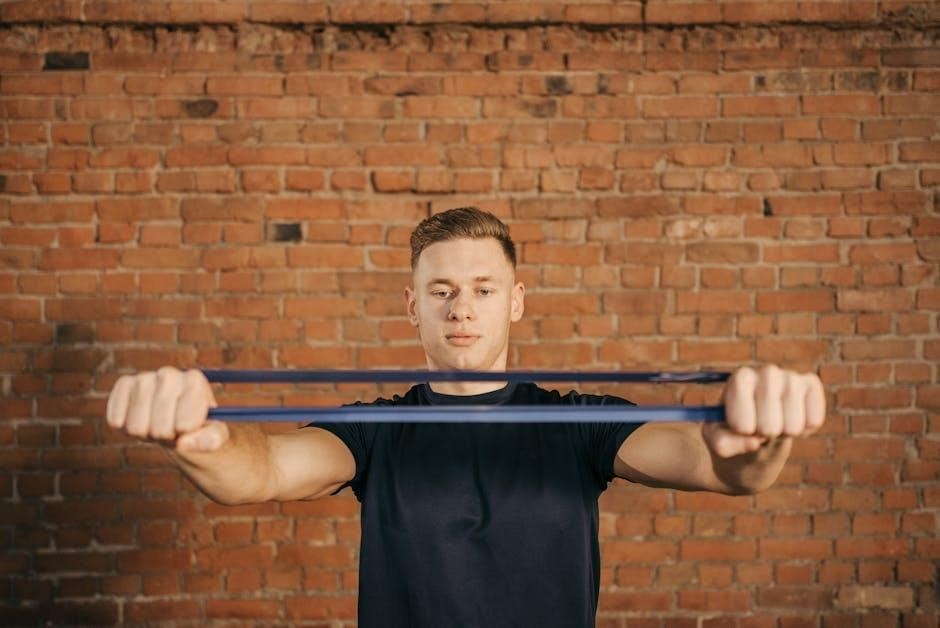
Studies demonstrate resistance band workouts rival weight training in muscle activation, a point emphasized in fitness PDFs and expert opinions. The constant tension provided by the bands challenges muscles throughout the entire range of motion, unlike some traditional exercises.

This sustained engagement leads to greater muscle fiber recruitment, particularly within the deep core musculature. Consequently, users experience enhanced strength gains and improved stability, making resistance bands a potent tool for core development, as detailed in workout guides.
Portability and Convenience
Resistance bands offer unparalleled portability, a key advantage highlighted in numerous downloadable workout PDFs. Unlike bulky gym equipment, bands are lightweight and compact, enabling effective core training anywhere – at home, while traveling, or outdoors;
This convenience removes barriers to consistent exercise, fitting seamlessly into busy lifestyles. Many free resources and guides detail quick, effective routines, making core strengthening accessible to everyone, regardless of location or time constraints.
Versatility for All Fitness Levels
Resistance bands cater to diverse fitness levels, a feature consistently emphasized in available PDF workout guides. Beginners can start with lighter resistance, gradually increasing intensity as strength improves. Advanced users can utilize heavier bands or combine them for challenging progressions.
This adaptability makes resistance band core exercises suitable for everyone, from those new to fitness to seasoned athletes seeking varied training stimuli, as demonstrated in numerous online resources.
Core Muscles Targeted by Resistance Band Exercises
Effective resistance band core training doesn’t just focus on aesthetics; it engages the entire core musculature. PDF workout resources highlight targeting the rectus abdominis, obliques (internal & external), and crucially, the transverse abdominis – vital for stability.
Strengthening these muscles improves posture, reduces back pain, and enhances functional movement, as emphasized by personal trainers and detailed in various exercise guides.
Rectus Abdominis
The rectus abdominis, commonly known as the “six-pack” muscle, is directly engaged in many resistance band core exercises. PDF workout plans often feature band leg raises and bicycle crunches to target this area.
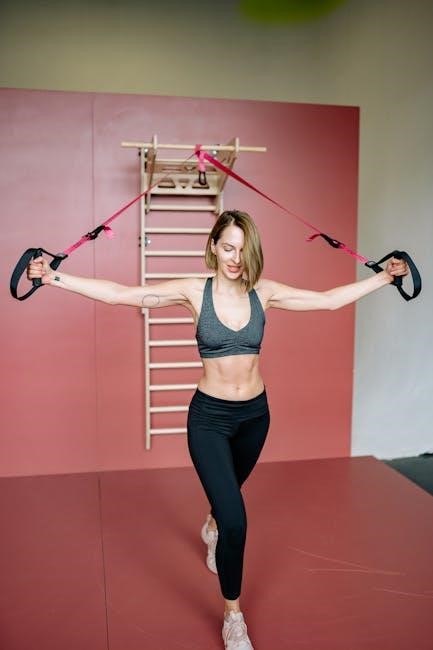
Resistance provides progressive overload, enhancing muscle activation. Strengthening the rectus abdominis improves core stability and contributes to a toned physique, as demonstrated in various fitness resources.
Obliques (Internal & External)
Resistance band exercises effectively target both internal and external obliques, crucial for rotational strength and spinal stability. PDF workout guides frequently include standing woodchops and side bends utilizing band resistance.
These exercises challenge the obliques, improving core function and contributing to a sculpted midsection. Proper form, as emphasized in fitness resources, is vital for maximizing engagement and preventing injury during these movements.
Transverse Abdominis
The transverse abdominis, your deepest core muscle, is vital for stabilization and posture. Resistance band exercises, particularly anti-rotation presses detailed in many PDF workout plans, directly engage this muscle.
These exercises demand controlled movements, forcing the transverse abdominis to work isometrically. Strengthening this muscle reduces back pain and improves overall core strength, as highlighted by personal trainers and rehabilitation guides available online.
Essential Resistance Band Types for Core Work
For effective core training, several band types are key. Loop bands, frequently featured in downloadable resistance band workout PDFs, are ideal for glute bridges and leg raises. TheraBands, offering varied resistance, excel in Pallof presses and woodchops.
Odoland resistance band workouts often include a combination. Choosing the right resistance level is crucial; PDFs typically suggest starting with lighter bands and progressing as strength increases, ensuring proper form and preventing injury.
Loop Bands
Loop bands, a staple in many resistance band core exercise PDFs, are continuous loops providing consistent tension. They’re excellent for exercises like glute bridges, where placement above the knees activates glutes and core simultaneously.
Their versatility extends to leg raises and standing exercises, offering a portable and affordable option. Odoland resistance band workouts frequently utilize loop bands due to their simplicity and effectiveness in targeting multiple core muscle groups.

TheraBands
TheraBands, often featured in therapeutic exercise PDFs, are flat resistance bands ideal for rehabilitation and core strengthening. They excel in exercises requiring controlled movements, like Pallof presses and anti-rotation presses, crucial for stabilizing the core.
These bands are frequently used post-stroke for regaining core control, as highlighted in research on aerobic and resistance training. Their adaptability makes them suitable for various fitness levels, mirroring content found in downloadable workout guides.
Top 10 Resistance Band Core Exercises
Explore a diverse range of exercises, often detailed in resistance band workout PDFs, to sculpt your core. Popular choices include standing woodchops, Russian twists, and Pallof presses, building rotational and anti-rotational strength.
Other effective movements are bicycle crunches, leg raises, scarecrow presses, and glute bridges. Many PDFs also feature side bends and anti-rotation presses, offering a comprehensive core challenge for all fitness levels.
Standing Resistance Band Woodchops
Engage your entire core with standing woodchops, frequently illustrated in resistance band exercise PDFs. Anchor the band securely and mimic a wood-chopping motion, rotating your torso while maintaining a stable base.
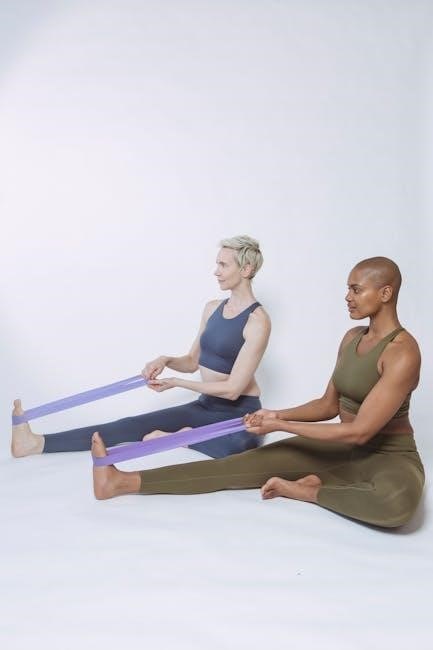
This dynamic exercise targets obliques and rectus abdominis, enhancing rotational power and stability. Focus on controlled movements and proper form, as detailed in many downloadable workout guides, to maximize effectiveness and prevent injury.
Resistance Band Russian Twists
Boost oblique engagement with resistance band Russian twists, a staple in core-focused PDFs. Sit with knees bent, feet slightly elevated, and loop a band around your feet. Rotate your torso side to side, maintaining a straight back and controlled movements.
The band adds resistance, intensifying the workout. Many downloadable resources emphasize proper form to avoid strain and maximize core activation, building rotational strength and stability.
Resistance Band Pallof Press
Strengthen your core’s anti-rotation capabilities with the Pallof Press, frequently detailed in resistance band exercise PDFs. Anchor a band at chest height and stand perpendicular to it, holding the band with both hands.
Press the band straight out, resisting the rotational pull. Maintain a stable core and avoid twisting. This exercise, often highlighted for posture improvement, builds functional strength and stability, crucial for everyday movements.
Resistance Band Bicycle Crunches
Elevate traditional bicycle crunches with resistance bands, a technique often illustrated in comprehensive core exercise PDFs. Secure a band under your feet and hold the ends near your shoulders.
Perform bicycle crunches, focusing on bringing your elbow to the opposite knee while extending the other leg. The band adds intensity, increasing muscle activation and challenging your obliques. This dynamic exercise enhances core stability and rotational power.
Resistance Band Leg Raises
Strengthen your lower abs and hip flexors with resistance band leg raises, a staple in many core exercise PDFs. Anchor the band securely and loop it around your ankles.
Lie on your back with legs extended, then slowly raise them towards the ceiling, resisting the band’s pull. Maintain a controlled descent. This exercise builds core stability and improves abdominal definition, often featured in therapeutic exercise programs post-stroke.
Resistance Band Standing Knee Raises
Engage your core and improve stability with resistance band standing knee raises, commonly found in comprehensive core exercise PDFs. Secure the band around a stable anchor point at ankle level.
Stand with slight tension on the band, then lift one knee towards your chest, resisting the band’s pull. Alternate legs, maintaining good posture. This dynamic exercise enhances core strength and coordination, mirroring movements used in rehabilitation and athletic training programs.
Resistance Band Scarecrow Press
Strengthen your core and improve rotational stability with the resistance band scarecrow press, often detailed in core exercise PDFs. Anchor the band at chest height and grasp it with both hands.
Step back to create tension, then press the band straight out in front of your chest, resisting rotation. Maintain a stable core and avoid twisting. This exercise builds anti-rotation strength, crucial for functional movements and injury prevention, as highlighted in therapeutic exercise guides.
Resistance Band Anti-Rotation Press
Enhance core stability and resist rotational forces with the anti-rotation press, frequently found in resistance band workout PDFs. Secure the band to a stable anchor point at chest height.
Grip the band with both hands, arms extended, and press straight forward while actively resisting the pull to rotate your torso. Maintain a braced core and stable posture throughout the movement. This exercise, often used in post-stroke rehabilitation, builds crucial anti-rotational strength.
Resistance Band Glute Bridges
Strengthen your glutes and core simultaneously with resistance band glute bridges, a staple in many resistance band exercise PDFs. Place a loop band around your thighs, just above the knees.

Lie on your back with knees bent and feet flat on the floor. Lift your hips off the ground, squeezing your glutes at the top of the movement. The band adds resistance, intensifying the glute and core engagement, contributing to improved posture and metabolic rate.
Resistance Band Side Bends
Target your obliques with resistance band side bends, often featured in comprehensive resistance band core exercise PDFs. Secure a loop band under both feet, holding the ends near your shoulders.
Stand with feet shoulder-width apart and slowly bend to one side, resisting the pull of the band. Maintain a straight back and controlled movement. This exercise builds core stability and strengthens the muscles responsible for rotational movements, enhancing overall functional fitness.

Creating a Resistance Band Core Workout Routine
Design a routine using exercises detailed in resistance band core exercise PDFs, prioritizing a balanced approach. Begin with a 5-10 minute warm-up, incorporating dynamic stretches.
Select 5-7 exercises, performing 3 sets of 12-15 repetitions each. Include variations targeting all core muscle groups. Finish with a cool-down, holding static stretches for 30 seconds. Progress gradually, increasing resistance or repetitions as strength improves.
Warm-up and Cool-down Exercises

Prioritize preparation and recovery! A dynamic warm-up, like torso twists and leg swings, prepares muscles for resistance band core exercises, as outlined in available PDFs.
Cool-downs, featuring static stretches – holding each for 30 seconds – enhance flexibility and reduce soreness. Focus on stretching the abdominals, obliques, and lower back. Proper warm-up and cool-down routines maximize workout benefits and minimize injury risk.
Progressing Resistance Band Core Exercises
Elevate your fitness journey! As core strength increases, progressively challenge yourself. This involves utilizing bands with greater resistance, mirroring guidance found in downloadable exercise PDFs.
Increase repetitions, sets, or decrease rest time between sets. Explore more complex variations of exercises. Prioritize maintaining proper form throughout progression to avoid injury and maximize core engagement, building real strength.

Safety Precautions and Common Mistakes
Prioritize safety during resistance band core training! Always inspect bands for cracks or tears before each session, referencing safety tips often included in downloadable workout PDFs.
Avoid overexertion and maintain correct form to prevent injuries. Common mistakes include using excessive resistance too soon or compromising posture. Anchor bands securely and control movements throughout each exercise for optimal results.
Proper Band Selection
Choosing the right resistance band is crucial for effective core training, often detailed in resistance band exercise PDFs. Loop bands and TheraBands offer varying resistance levels; start with lighter bands and progress gradually.
Consider your fitness level and the specific exercise. Heavier bands are suitable for advanced users, while lighter bands are ideal for beginners or rehabilitation. Ensure the band’s length accommodates your range of motion.
Maintaining Correct Form
Prioritize proper form during resistance band core exercises, as emphasized in many downloadable PDFs. Engage your core throughout each movement, maintaining a neutral spine and controlled motions.
Avoid arching your back or using momentum to complete the exercise. Focus on slow, deliberate repetitions to maximize muscle activation and minimize the risk of injury. Correct form ensures effectiveness and safety.
Avoiding Overexertion
Resistance band core workouts, detailed in numerous PDF guides, require mindful progression. Start with lighter bands and fewer repetitions, gradually increasing intensity as strength improves.
Listen to your body; stop if you experience sharp pain. Overexertion can lead to muscle strains or injuries. Prioritize controlled movements over speed or high resistance. Rest adequately between sets and workouts to allow for muscle recovery and prevent fatigue.