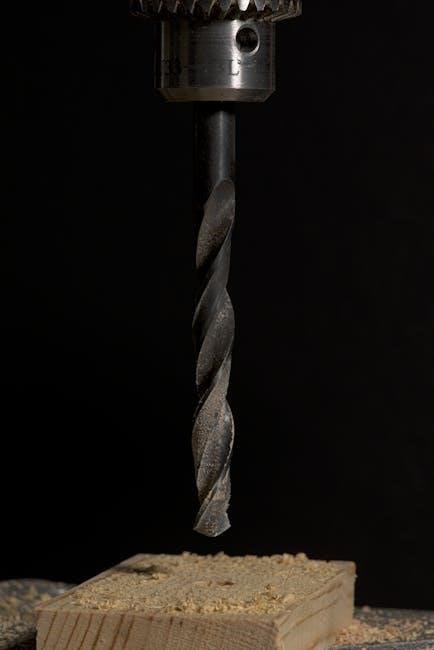
Milescraft drill guides offer a budget-friendly solution for achieving precise, 90-degree holes, especially for those lacking a drill press; however, build quality varies.
These guides, while not spectacular, provide a noticeable improvement over freehand drilling, though they may require more effort and aren’t always perfectly smooth.
What is a Milescraft Drill Guide?
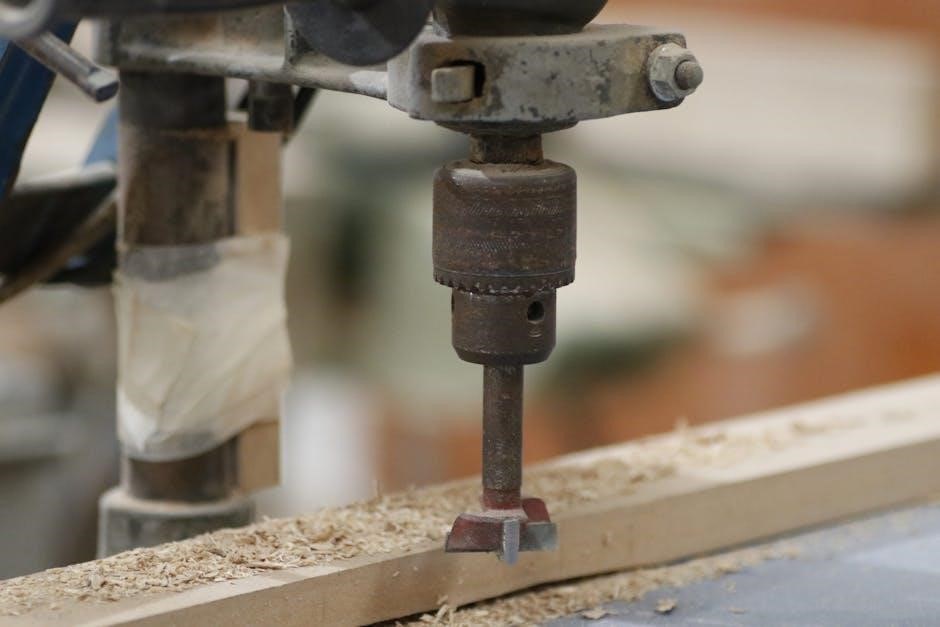
A Milescraft Drill Guide is a handheld tool designed to assist in drilling straight, accurate holes, particularly at 90-degree angles. It’s essentially an adapter that attaches to your standard drill, providing a channeled pathway for the drill bit. This pathway helps maintain consistent alignment, reducing the likelihood of angled or wandering holes – a common issue when drilling freehand.
Typically constructed from a combination of steel and plastic, these guides aim to bridge the gap between basic drilling and the precision of a drill press. The Milescraft Drill Mate, a popular model, exemplifies this, offering a relatively affordable solution for projects demanding accuracy. However, users often note that the build quality reflects the price point, with some experiencing less-than-smooth operation even after lubrication. The guides are intended to improve drilling consistency, but aren’t necessarily a replacement for more robust equipment.
Benefits of Using a Drill Guide
The primary benefit of using a Milescraft Drill Guide is improved drilling accuracy, specifically achieving consistent 90-degree holes that are difficult to replicate freehand. This is particularly valuable for projects where precise alignment is crucial, such as furniture assembly or woodworking requiring tight tolerances. While not as powerful as a drill press, a drill guide offers a significant upgrade over unaided drilling.
Furthermore, drill guides provide a more controlled drilling experience, reducing the risk of bit wandering and potential material damage. They are a cost-effective alternative to investing in a full-sized drill press, making them accessible to hobbyists and DIY enthusiasts. However, it’s important to acknowledge that using a guide may require more physical effort than a drill press, and the quality of results can vary depending on the specific model and drill bit used.
Types of Milescraft Drill Guides
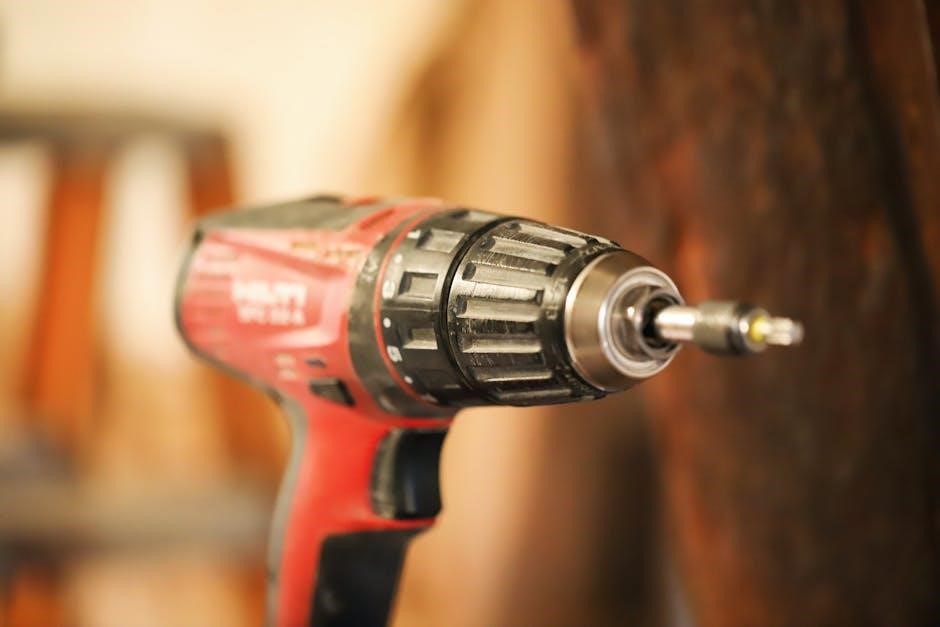
Milescraft offers diverse drill guides, including the versatile Drill Mate and specialized Pocket Hole guides, catering to various drilling needs and project complexities.
Milescraft Drill Mate: Overview and Features
The Milescraft Drill Mate is a popular, cost-effective drill guide designed to assist with creating accurate 90-degree holes. Constructed from a combination of steel and plastic, it aims to improve drilling precision for users without a drill press.
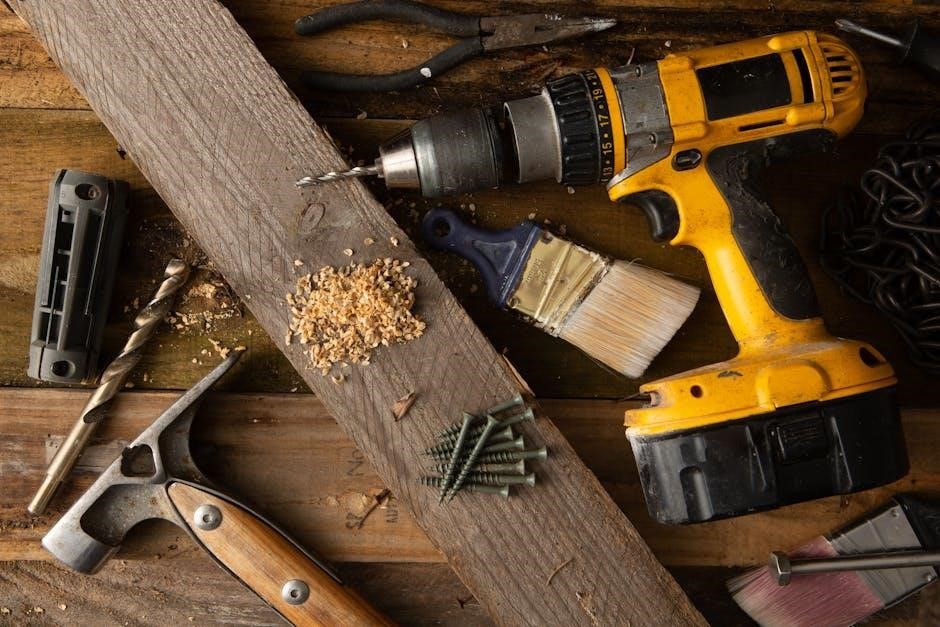
However, user feedback indicates the build quality is commensurate with its price point, lacking a particularly durable feel. Assembly can be challenging due to minimal instructions – often just an exploded view diagram without accompanying text. Despite applying dry lubricant, some users report the guide rails aren’t exceptionally smooth during drill operation.
It accommodates various drill bit sizes, though performance varies; standard drill bits generally work best. While it requires more effort than freehand drilling, the Drill Mate successfully delivers those crucial, straight 90-degree holes, making it a viable option for specific tasks.
Milescraft Pocket Hole Drill Guide: Specific Uses
While the provided text primarily focuses on the Milescraft Drill Mate, the broader utility of Milescraft drill guides extends to specialized applications like pocket hole joinery. Though not explicitly detailed in the source material, a dedicated pocket hole drill guide facilitates creating angled holes for strong, concealed wood connections.
These guides are particularly useful for projects like face frames, drawer boxes, and furniture assembly where traditional screws and fasteners would be visible. The precision offered by a Milescraft guide ensures consistent hole placement, crucial for pocket hole success.
Considering the general feedback on Milescraft products, expect a plastic and steel construction and potentially limited instructions. However, for focused pocket hole drilling, a dedicated guide can be a worthwhile investment, especially if a drill press isn’t available, offering a significant improvement over freehand attempts.

Setting Up Your Milescraft Drill Guide
Assembly can be challenging due to minimal instructions – often just an exploded view diagram – requiring some user interpretation and patience during setup.
Assembling the Drill Guide
The initial setup of a Milescraft drill guide, particularly the Drill Mate, is frequently cited as a point of frustration for users. The included instructions are notoriously sparse, typically consisting of a single, unannotated exploded diagram. This lack of detailed guidance means assembly relies heavily on intuitive understanding and trial-and-error.
Expect to spend a few minutes deciphering how the various plastic and metal components interlock. While not exceptionally complex, the absence of written steps can be time-consuming. Ensure all parts are correctly oriented before applying significant force, as incorrect assembly can lead to instability or difficulty in operation. A careful examination of the diagram and a methodical approach are key to successful assembly.
It’s worth noting that some users have reported minor fit issues, contributing to the overall challenge.
Adjusting for Drill Bit Size
Proper adjustment for drill bit size is crucial for accurate drilling with a Milescraft guide. The guide features bushings designed to accommodate various bit diameters, ensuring a snug fit and preventing wobble during operation. Selecting the correct bushing is the first step; it should closely match the bit you intend to use.
The adjustment mechanism typically involves loosening a screw or clamp, swapping the bushing, and then re-tightening it securely. It’s important to ensure the bushing is fully seated and doesn’t have any play. A loose bushing will compromise accuracy and potentially damage the guide.
Users have noted that some bushings fit more snugly than others, and occasionally, minor adjustments or shimming may be needed for optimal performance. Testing with a scrap piece of wood is always recommended before working on your project.
Using the Milescraft Drill Guide for Accurate Drilling
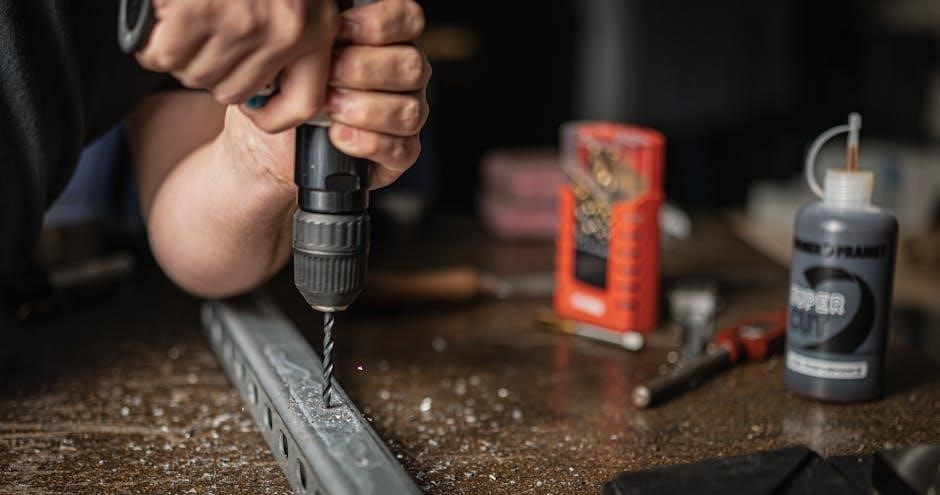
Milescraft guides excel at creating consistently square, 90-degree holes, a task challenging to achieve freehand, though they may demand increased drilling effort.
Achieving 90-Degree Holes
Milescraft drill guides fundamentally aim to deliver accurate 90-degree holes, a significant advantage over attempting this precision by hand. Users report a noticeable improvement in hole alignment when utilizing these guides, even with varying drill bit types.
However, achieving optimal results isn’t entirely effortless. The guides, particularly the Drill Mate model, can require more force during drilling compared to unassisted drilling. This is attributed to the build quality, a blend of steel and plastic, which doesn’t always provide the smoothest operation, even with lubrication.
Despite this, the guide’s structure effectively constrains the drill, minimizing deviation and ensuring a perpendicular angle. Regular style drill bits generally perform best within the guide, offering the most consistent and accurate results. For specialized bits, or when absolute perfection isn’t critical, the guide still provides a substantial improvement over freehand methods.
Drilling with Different Bit Types
Milescraft drill guides demonstrate varying levels of effectiveness depending on the drill bit employed. While adaptable to a range of bit types, performance isn’t uniform across the board. Users have found that standard drill bits integrate most seamlessly with the guide, yielding the most predictable and accurate results.
However, utilizing other bit styles, such as specialized or unconventional designs, can present challenges. The guide’s construction and tolerances may not perfectly accommodate all bit geometries, potentially leading to increased friction or reduced precision. The 1/8 inch bit was specifically mentioned as a challenging size.
Despite these limitations, the guide remains a valuable tool for enhancing accuracy, even with less-than-ideal bit compatibility. It’s important to note that achieving truly perfect results may necessitate careful adjustment and increased effort when working with non-standard drill bits.
Milescraft Drill Guide vs. Drill Press
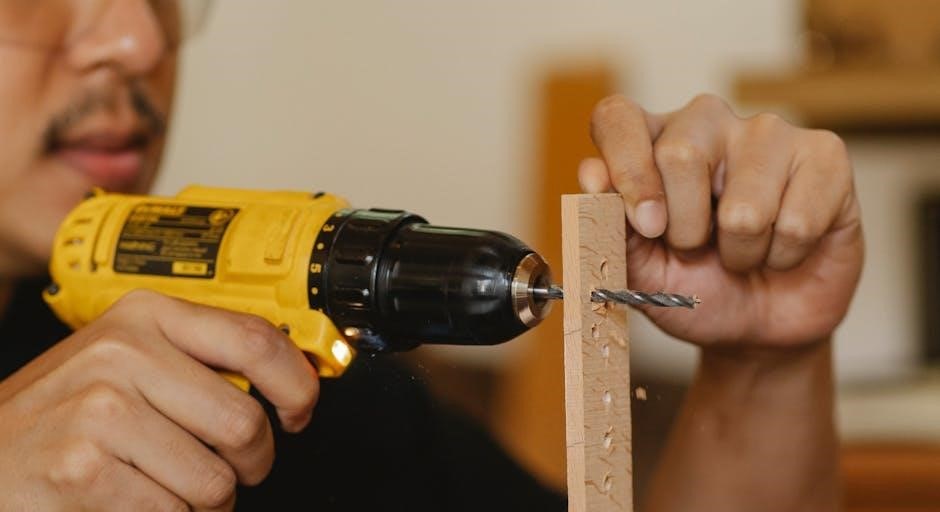
A drill press offers superior clamping and pressure capabilities, making it more versatile; however, a Milescraft guide is a cheaper alternative if a press isn’t available.
Advantages of a Drill Press
Drill presses fundamentally offer a level of precision and control that Milescraft drill guides simply cannot match. The rigid structure of a drill press minimizes wobble and vibration, leading to cleaner, more accurate holes consistently. A key advantage lies in the ability to securely clamp materials to the drill press bed, freeing both hands for operation and applying consistent, even pressure.
Furthermore, the lever-operated feed mechanism allows for controlled drilling depth, crucial for projects demanding uniformity. Unlike a drill guide, a drill press accommodates a wider range of bit sizes and types with ease, and its versatility extends beyond simple hole drilling to tasks like sanding and routing with appropriate attachments. While a Milescraft guide aids in achieving 90-degree angles, a drill press inherently provides this accuracy without significant effort.
Ultimately, the stability and features of a drill press translate to increased efficiency and higher-quality results, especially for repetitive or complex drilling tasks.
When to Choose a Drill Guide Over a Drill Press
A Milescraft drill guide presents a viable alternative when space or budget constraints preclude acquiring a drill press. For infrequent drilling needs, or projects where absolute precision isn’t paramount, a guide offers a cost-effective solution. They are particularly useful for achieving 90-degree holes in situations where freehand drilling proves challenging, providing a noticeable improvement in accuracy.
Portability is another key benefit; drill guides are lightweight and easily transportable to different worksites, unlike a stationary drill press. If you only occasionally require accurate drilling and don’t want the commitment of a larger tool, a guide can suffice. However, be prepared for a potentially less smooth operation and the need to apply more manual effort compared to a drill press.
Essentially, a drill guide is a compromise – a step up from freehand drilling, but not a replacement for the capabilities of a dedicated drill press.

Troubleshooting Common Issues
Milescraft drill guide issues often involve rough movement or accuracy problems; applying dry lubricant and ensuring proper bit adjustment can frequently resolve these concerns.
Addressing Rough Movement
Rough movement is a commonly reported issue with the Milescraft drill guide, stemming from the materials used and the construction quality. Many users have found that the guide doesn’t slide smoothly when applying pressure with the drill. A simple, yet effective, solution is to apply a dry lubricant, such as graphite powder or PTFE spray, to the guide rails.
This reduces friction and allows for a smoother drilling experience. Ensure the lubricant is evenly distributed along the rails. Another potential cause of rough movement is improper assembly; double-check all connections to confirm everything is securely fastened. If the issue persists, consider slightly loosening and re-tightening the screws, ensuring they aren’t overly constricted, which can bind the mechanism. Remember, the unit is a budget option, and some friction is expected.
Improving Accuracy
Achieving optimal accuracy with the Milescraft drill guide requires attention to detail and understanding its limitations. While it excels at producing 90-degree holes compared to freehand drilling, it isn’t a substitute for a drill press’s precision. Ensure the workpiece is firmly secured to prevent shifting during drilling; clamping is crucial;
Using the correct drill bit for the material is also vital. Regular-style drill bits generally yield the best results within the guide. Start with a pilot hole to guide the larger bit and reduce wandering. Apply consistent, even pressure while drilling, avoiding excessive force, which can deflect the bit. Finally, remember that the build quality isn’t premium, so minor adjustments and careful technique are key to maximizing accuracy.

Maintenance and Care
Regular cleaning and proper storage will extend the life of your Milescraft drill guide, ensuring smooth operation and continued accuracy over time.
Cleaning Your Drill Guide
Consistent cleaning is crucial for maintaining the functionality of your Milescraft drill guide. After each use, remove any sawdust or debris that may accumulate within the guide rails and around the drill bit openings. A simple brush or compressed air can effectively dislodge these particles, preventing binding and ensuring smooth movement.
For more stubborn residue, a slightly damp cloth can be used, but always ensure the guide is thoroughly dried before storage to prevent rust or corrosion, particularly on any steel components. Avoid using harsh chemicals or abrasive cleaners, as these could damage the plastic or metal parts. A light application of dry lubricant to the guide rails after cleaning can further enhance smoothness and reduce friction during future drilling operations, contributing to overall precision and longevity.
Storage Recommendations
Proper storage significantly extends the lifespan of your Milescraft drill guide. Ideally, store the guide in a dry environment, away from extreme temperatures and humidity, to prevent rust and warping of plastic components. A dedicated toolbox or storage bin is recommended, protecting it from dust and accidental damage.
When storing, ensure all parts are assembled, or if disassembled for space-saving, keep them together in a labeled bag. Avoid placing heavy objects on top of the guide, as this could potentially damage the plastic housing or misalign the guide rails. Periodically inspect the guide for any signs of corrosion or wear, addressing them promptly to maintain optimal performance. Careful storage ensures your drill guide remains a reliable tool for years to come.